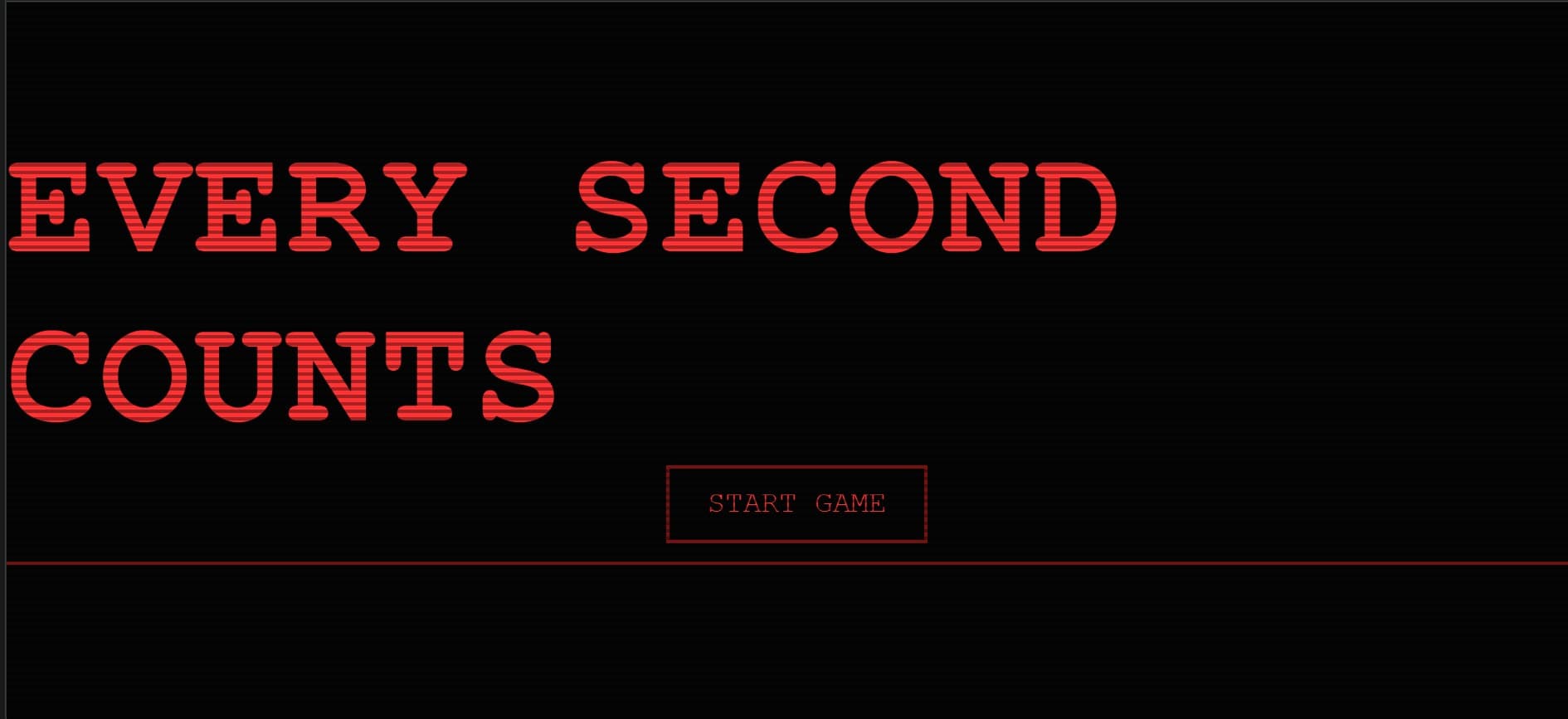
Every Second Counts
A psychological puzzle game about the illusion of control.
2026-08-22
What Every Second Counts actually is
Every Second Counts is a psychological puzzle game built around a deliberately uncomfortable idea: the player assumes that because a problem exists, there must be a way to solve it.
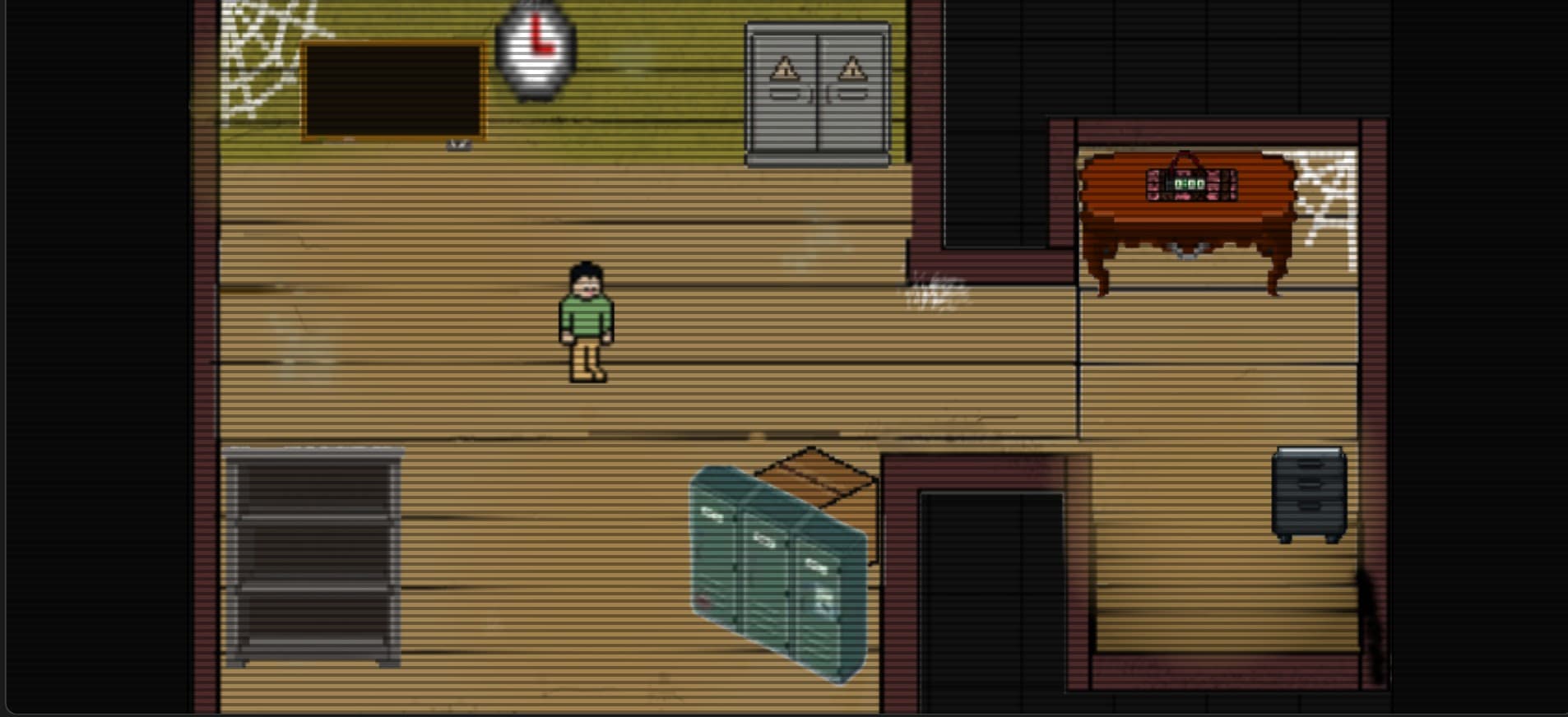
You begin in a confined room with a five-minute countdown. Rather than being handed a clear objective, you are placed in an environment containing several objects that can be interacted with. The player moves around the room, discovers these objects, and presses E to investigate them.
Those objects lead to different puzzles:
- Minesweeper
- Maze
- Memory puzzle
- Lock combination
- Tetris
The puzzles are not simply independent mini-games. They are tied together by the central countdown and by the game's psychological premise: you naturally believe that solving the puzzles must eventually give you control over the situation.
That is where the game becomes interesting.
The central mechanic: false agency
The timer creates an extremely strong psychological effect.
When players see a countdown, they instinctively start searching for a solution:
There must be something I can do.
So the player begins experimenting.
- Maybe the bomb is relevant.
- Maybe the lock is important.
- Maybe completing the maze unlocks something.
- Maybe Minesweeper reveals a clue.
- Maybe Tetris is somehow part of a larger mechanism.
The game exploits that instinct. The player is encouraged to interpret every object as potentially meaningful, because games have trained us to believe that interactive objects exist for a reason.
The cruel question becomes: What if there isn't a solution?
Why the timer matters
The timer is not merely a difficulty mechanic. It is essentially the game's main narrative device.
The longer the player spends trying different approaches, the more psychologically invested they become in the belief that their actions matter. The countdown steadily destroys that confidence.
That creates a progression like: Curiosity → experimentation → confidence → desperation → realization
The player initially thinks:
“I just haven't figured it out yet.”
Then:
“There has to be another interaction.”
Then:
“Maybe I made a mistake.”
And eventually:
“Maybe there was never anything I could do.”
That is the game's real puzzle.
The deeper theme
Every Second Counts is about choice, control, and humanity's tendency to assume that every problem is solvable.
Games normally teach players that their actions matter:
- Press a button → something happens.
- Solve a puzzle → progress.
- Find an item → unlock something.
- Try again → improve.
Every Second Counts deliberately challenges that expectation. It asks what happens when you place a player inside a familiar game structure but remove the guarantee that player agency actually changes the outcome.
That makes the countdown almost existential. The player is not really racing against the clock. They are racing against the possibility that the clock was never theirs to control in the first place.
The Stanley Parable connection
The game shares themes with The Stanley Parable: Ultra Deluxe, playing with the relationship between player expectation and perceived agency.
The player enters expecting the environment to communicate a goal: There is a timer → therefore there must be something that stops it.
That assumption may itself be the trap. The game effectively asks:
- Why did you assume you were supposed to win?
- Why did you assume that trying harder would change the result?
Technical Structure
The game is implemented as a JavaScript browser game with a central canvas-based environment. The player has movement, sprinting, collision detection, interaction range, and an interaction system. Approaching certain objects displays a “Press E” prompt, after which the corresponding mini-game is opened in an overlay.
The main environment includes five interactable puzzle stations, while the game also tracks:
- Whether the player has previously attempted each puzzle
- Whether each puzzle has been completed
- The number of attempts/resets
- Different failure states
- Contextual voice lines/audio for interactions and failures
This means the game is structured as an experience built around player behavior. The system observes what the player does and uses audio, failure responses, and progression states to reinforce the feeling that their decisions are meaningful.
Play the game live at: gmtk.jackjacobson2011.com
Check out the repository on GitHub: Every-Second-Counts